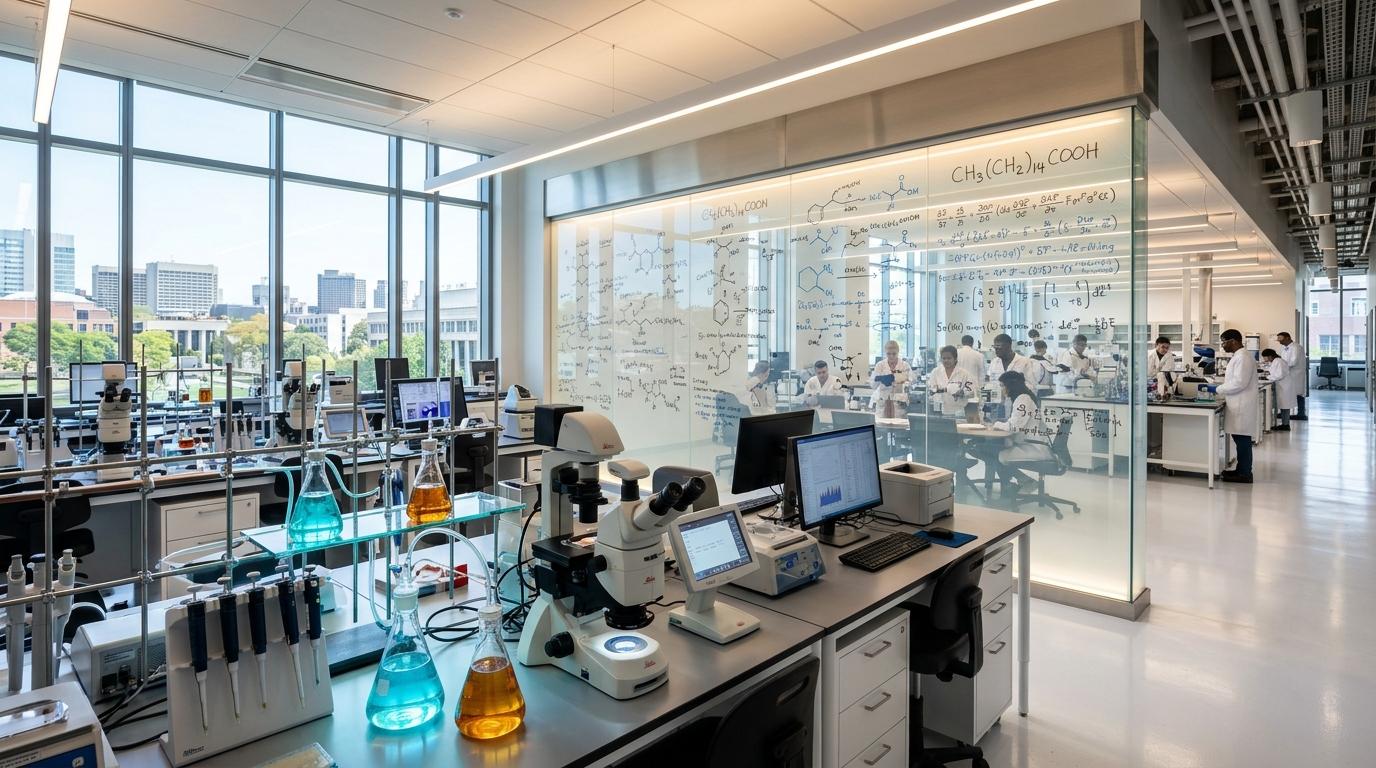
MIT Beaver Works & MIT Lincoln Laboratory, Cambridge, MA
MIT Beaver Works Summer Institute (BWSI)
Four-week intensive engineering sprint across autonomous racecars, drones, AI, cybersecurity, and quantum software preceded by mandatory online courses.
Overview: MIT BWSI
Program mission, scale, and why it matters to top university admissions.
Operated by MIT Beaver Works and MIT Lincoln Laboratory, BWSI runs a 4-week July project-based engineering institute across 14 technical tracks (8 virtual and 6 in-person non-residential on the MIT campus).
- 2027 summer session runs July 5 to August 1, 2027, with final challenge events on July 31 (in person) and August 1 (virtual).
- Tuition Policy (2026-2027): Free ($0) for families with household income and asset liability under $200,000 (verified via Clarity), and $3,000 for families at or above $200,000 (no dorm housing provided).
- Prerequisite Gate: Applicants must register for and complete tracked online prerequisite courses (including Python Core) starting February 1, 2027 to qualify for summer enrollment.
- Strict Eligibility: Open only to students in Grade 11 or below (mostly rising seniors; no Grade 12 or below Grade 10) who attend a US high school and reside in the US during July.
Acceptance & Selectivity Funnel
Historical progression data from global registration through finalist commendations and podium honors.
What MIT BWSI Looks For
Tracks, Judging Criteria & Curriculum Alignment
14 Specialized Engineering Tracks & US Residency Rule
- Eight Virtual Courses & Six In-Person Non-Residential MIT Courses
- Virtual (10am-6pm EDT): CogWorks (AI), Medlytics (Medical AI), Quantum Software, Remote Sensing for Disaster Response, and more.
- In-Person at MIT (9am-5pm EDT, no housing): Autonomous RACECAR Grand Prix, Autonomous Air Vehicle Racing, Cyber Operations, and Basics of ASICs.
- US High School Rule & $200k Clarity Tuition Tier
- Must physically attend a US high school, reside in the US in July, and be in Grade 10 or 11 (rising seniors prioritized).
- Free under $200,000 income/assets; $3,000 tuition otherwise (due June 6).
Mandatory Online Prerequisites & Application Package
- Tracked Online Prerequisite Courses (Open Feb 1, 2027)
- Registration for online prerequisite courses (such as Python Core and track-specific modules) opens February 1 and closes March 31.
- Completion progress and quiz performance in the prerequisite portal weigh heavily in summer admission.
- Three Short Essays, GPA, Awards & Teacher Recommendation
- Requires 3 short essays (<=500 words each), weighted GPA, honors/awards (200 chars max), and 1 teacher/mentor recommendation due April 2/3.
- Final admission decisions are emailed at the end of April.
Curriculum Mapping & Target University Majors
- AP, IB and Project-Based STEM Alignment
- Builds directly on AP Computer Science A, Physics C, and Calculus BC with real Git, Linux, ROS, and PyTorch engineering.
- International students outside the US cannot attend the July summer institute, though they can explore open online BWSI materials.
- Supported Undergraduate Degree Pathways
- Computer Science, Artificial Intelligence, Robotics, and Cybersecurity.
- Electrical Engineering, Aerospace Engineering, and Quantum Engineering.
Past Prompts & Winning Framework
Deconstruct real prompts and case studies through our analytical evaluation framework.
“Describe your technical project background, why you selected your target BWSI course, and how you have prepared through the online prerequisite modules.”
Pinpoint one concrete technical domain inside your chosen BWSI track (such as PID lane-following control in RACECAR or spectrogram classification in CogWorks).
Walk through a real coding or hardware debugging challenge you solved in Python, C++, or Arduino rather than listing language names.
Show steady completion progress in the February-to-March BWSI online prerequisite portal, since unfinished prerequisites stall applications.
Highlight your readiness for an intense 8-hour-a-day collaborative sprint ending in the July 31 / August 1 final competition.
“Explain how you would use STEM to solve a community issue or reflect on overcoming a moment when you felt out of place in STEM.”
Anchor your story in a specific community problem or personal learning hurdle you actually experienced.
Demonstrate how collaborative engineering teams bridge gaps when individual teammates struggle.
Keep the reflection concise and grounded within BWSI's character-counted essay box.
Connect your mindset to BWSI's team-based Grand Prix and hackathon culture.
6-Month Preparation Timeline
Six-month plan from Python prep to completing the BWSI online prerequisites.
Python, Git & Track Exploration
- Confirm US high school enrollment and select your top BWSI track (virtual vs. Boston commuter).
- Build solid fluency in Python, NumPy, and Git before February.
Online Prerequisite Registration (Jan/Feb)
- Submit self-registration in January so your online prerequisite account activates on February 1.
- Brief 1 STEM teacher or mentor for the early April recommendation.
Prerequisite Modules & March 31 Application
- Work steadily through the tracked online prerequisite modules (Python Core + course modules) in February and March.
- Write all 3 essays, enter awards/GPA, and submit the summer enrollment form by March 31.
Recommendation Check & Clarity Aid
- Ensure your teacher recommendation arrives by April 2/3.
- Complete Clarity financial verification after late-April admission if eligible for the $0 tuition tier.
Important Deadlines for MIT BWSI
2027 MIT BWSI Prerequisite & Enrollment Schedule
Admissions Strategy & Tips
Common Pitfalls to Avoid
Ignoring the Mandatory Online Prerequisite CoursesSimply submitting essays on March 31 without actively completing the February-March online prerequisite modules makes admission unlikely.
Expecting Campus Dorm Housing for In-Person MIT CoursesThe 6 in-person MIT courses are strictly non-residential; out-of-state students without Boston housing should choose one of the 8 virtual courses.
Applying from Outside a US High SchoolStudents attending high schools outside the US cannot enroll in the July BWSI summer session.
Frequently Asked Questions: MIT BWSI
Common queries from applicants and families about admissions.
Quick Facts
Key Dates & Deadlines
Aiming for a Commendation or Global Podium?
Work 1-on-1 with past evaluators and top medalists who guide your research, review drafts, and run mock oral defenses.
Match Me With a MentorRelated Competitions
Get Mentorship for MIT Beaver Works (BWSI)
Work 1-on-1 with MIT and robotics mentors on Python readiness and BWSI essays.