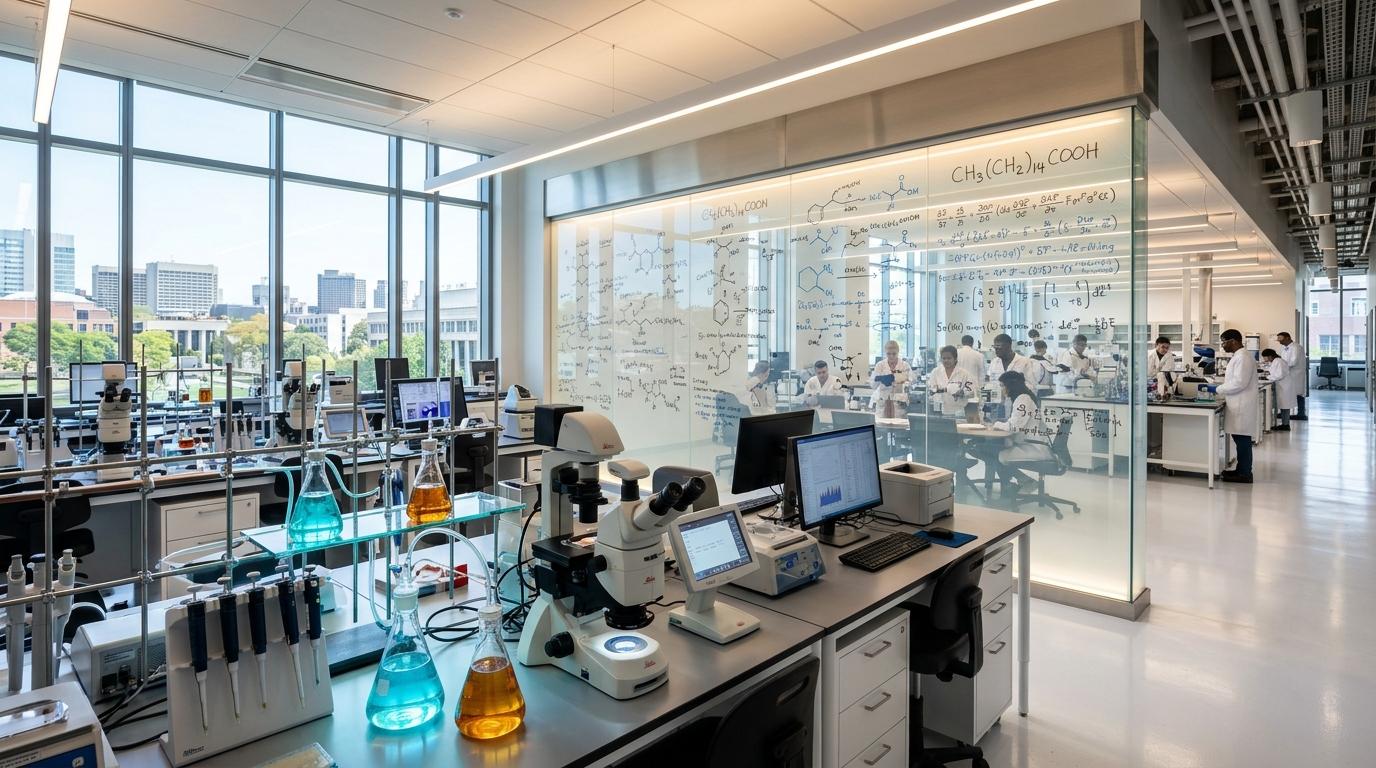
Stanford University School of Medicine, California
Stanford Institutes of Medicine Summer Research Program (SIMR)
Eight weeks of full-time hands-on biomedical and bioengineering research inside Stanford School of Medicine laboratories.
Overview: Stanford SIMR
Program mission, scale, and why it matters to top university admissions.
Hosted by the Stanford University School of Medicine, SIMR places roughly 50 high school juniors and seniors into active biomedical laboratories for 8 weeks of full-time (40 hours/week) summer research.
- Admits ~50 interns each summer from 1,500+ applicants (~3% acceptance rate) across 8 biomedical research institutes plus a hands-on Bioengineering Team Internship.
- Charges $0 tuition ($50 SlideRoom application fee, waived under $80,000 income), though stipends are generally not provided except for very limited need-based grants.
- Strict Eligibility & Commuter Rule: Restricted to US Citizens and Permanent Residents (age 16+ by June start) living and attending high school in the US with verified local Bay Area housing (hotels and Airbnbs are prohibited).
- Tentative 2027 summer dates are June 7 to July 29, 2027, culminating in the August Stanford Poster Symposium.
Acceptance & Selectivity Funnel
Historical progression data from global registration through finalist commendations and podium honors.
What Stanford SIMR Looks For
Tracks, Judging Criteria & Curriculum Alignment
Eight Biomedical Institutes, Bioengineering & Residency Rules
- Eight Stanford Medical Institutes + Bioengineering Team Track
- Immunology, Cancer Biology, Stem Cell & Regenerative Medicine, Neuroscience, Cardiovascular Biology, Genetics & Genomics, Bioinformatics, and Bioengineering.
- Bioengineering Team Interns meet Mon/Wed/Fri (9am to 4pm) in teams of 4 to 5 to engineer a clinical medical device without needing prior wet-lab experience.
- Strict US Citizen/PR & Bay Area Commuter Rules
- Open only to rising seniors and graduating seniors (Class of 2027 or 2028) aged 16+ who are US Citizens or PRs attending high school in the US.
- No dorms provided; non-local admits must live with a verified adult family member or guardian within commuting distance.
SlideRoom Selection Criteria & Character-Limited Essays
- Two 3,500-Character SlideRoom Essays
- Applicants rank their top 5 institutes and explain why their top choices align with their scientific curiosity.
- Second essay explores personal background, resilience, or an impactful work/extracurricular experience.
- Transcript, One Teacher Letter & Housing Verification
- Requires unofficial transcripts from Grade 9 onward, 1 teacher recommendation (school email required), and optional test scores.
- Applicants must not cold-email Stanford faculty during the application window.
Curriculum Mapping & Target University Majors
- AP, IB and International Student Alternatives
- Aligns with AP/IB Biology, Chemistry, Computer Science, and Statistics.
- Indian citizens in India are ineligible for SIMR and should target Rockefeller SSRP, RSI-India, or SSP instead.
- Supported Undergraduate Degree Pathways
- Molecular Biology, Immunology, Neuroscience, Genetics, and Pre-Med (BS/MD).
- Bioengineering, Bioinformatics, and Computational Biology.
Past Prompts & Winning Framework
Deconstruct real prompts and case studies through our analytical evaluation framework.
“Explain why you are applying to SIMR, why you ranked your top biomedical institutes, and how this internship fits your academic goals.”
Open with a specific biological mechanism or medical device bottleneck studied inside your #1 and #2 ranked Stanford institutes.
Connect that mechanism to your lab coursework, Python/R bioinformatics work, or science fair projects.
Avoid generic pre-med statements about wanting to help people, and never mention cold-emailing Stanford PIs.
Stay strictly under 3,500 characters including spaces (~500 words) and highlight your readiness for a 40-hour/week lab schedule.
“Design a clinical medical device solving a real-world healthcare problem (such as a novel eye-drop delivery system, light-based cancer diagnostic tool, or concussion-predicting football helmet).”
Identify the exact clinical failure mode in current patient care (for example, low ocular bioavailability in standard eye drops).
Explain how your engineering mindset (CAD, microcontrollers, or data modeling) pairs with collaborative 4-to-5-student teamwork.
Highlight practical constraints like cost, patient ergonomics, and sensor calibration rather than sci-fi claims.
Confirm your full availability from June 7 through July 29 with zero school exam conflicts.
6-Month Preparation Timeline
Six-month preparation plan for eligible US/Bay Area biomedical applicants.
Eligibility Audit & Biomedical Project
- Confirm US citizenship/PR status, Bay Area commuter housing, and early-June finals clearance.
- Build a wet-lab or Python/R bioinformatics project to anchor your SlideRoom essays.
Institute Ranking & Recommender Briefing
- Review all 8 SIMR Institutes and the Bioengineering Team track to pick your top 5 choices.
- Brief your science teacher early so they submit their recommendation via school email.
SlideRoom Setup & 3,500-Character Essays
- Open your SlideRoom account on December 18 when the 2027 application releases.
- Draft and tighten both essays strictly under 3,500 characters including spaces.
Transcript Upload & Late February Submission
- Upload transcripts from Grade 9 onward and housing verification details.
- Submit before the late February 2027 deadline.
Important Deadlines for Stanford SIMR
2026 to 2027 Stanford SIMR Application & Program Cycle
Admissions Strategy & Tips
Common Pitfalls to Avoid
Applying Without US Citizenship/PR or Local Bay Area HousingInternational students are ineligible, and non-Bay Area admits cannot stay in hotels, Airbnbs, or sublets.
Confusing 3,500 Characters with 3,500 WordsSlideRoom caps each essay at 3,500 characters including spaces (~500 words).
Cold-Emailing Stanford Faculty During AdmissionsStanford explicitly instructs SIMR applicants not to contact PIs directly during the application process.
Frequently Asked Questions: Stanford SIMR
Common queries from applicants and families about admissions.
Quick Facts
Key Dates & Deadlines
Aiming for a Commendation or Global Podium?
Work 1-on-1 with past evaluators and top medalists who guide your research, review drafts, and run mock oral defenses.
Match Me With a MentorRelated Competitions
Get Mentorship for Stanford SIMR
Work 1-on-1 with biomedical researchers on institute alignment and SlideRoom essays.