Center for Excellence in Education, MIT & IISc Bengaluru
Research Science Institute & RSI-India
Six weeks of 100% free, graduate-level summer research at MIT or IISc Bengaluru where the world's top rising seniors write and defend original scientific papers.
Overview: RSI (MIT & IISc)
Program mission, scale, and why it matters to top university admissions.
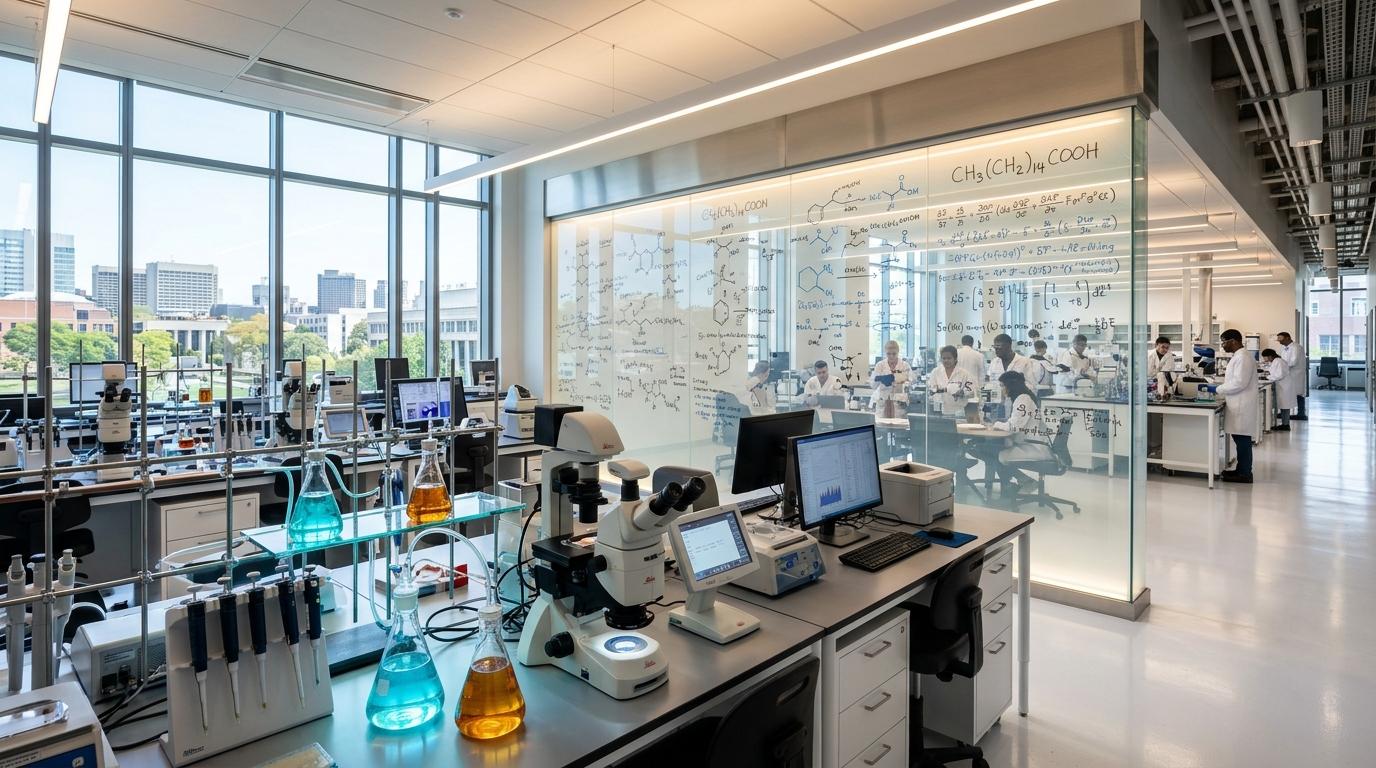
Founded in 1984 by Admiral Hyman G. Rickover, the Research Science Institute (RSI) is the world's most selective cost-free summer research fellowship, pairing rising high school seniors 1-on-1 with faculty mentors at MIT (or IISc Bengaluru for RSI-India).
- Admits roughly 100 students at MIT (expanding with a 50-student Stanford cohort in 2027) from 3,100+ applications (~2.5% acceptance rate), plus 32 to 35 Indian Class 11 students at RSI-India hosted at IISc Bengaluru.
- 100% free of charge (0 tuition, room, and board), combining 1 week of intensive STEM and humanities seminars with 5 weeks of full-time original laboratory or theoretical research.
- Culminates in a LaTeX-typeset scientific paper and conference-style oral defense judged by visiting scientists and corporate researchers.
- Historical alumni ('Rickoids') include Fields Medalist Terence Tao and CRISPR pioneer Feng Zhang, with 80%+ matriculation to MIT, Harvard, Stanford, Princeton, and Caltech.
Acceptance & Selectivity Funnel
Historical progression data from global registration through finalist commendations and podium honors.
What RSI (MIT & IISc) Looks For
Tracks, Judging Criteria & Curriculum Alignment
Host Campuses, Research Tracks & Citizenship Routing
- MIT/Stanford RSI vs. RSI-India at IISc Bengaluru
- US Citizens & Permanent Residents (including those living in India) apply directly to the US RSI pool by December 11 (75 application fee with waiver available).
- Indian Citizens in Class 11 in India apply directly to RSI-India at IISc Bengaluru (www.cee.org/RSI_India) at zero cost without requiring school nomination.
- Six Individual Mentor-Matched STEM Disciplines
- Biology & Biotechnology, Chemistry & Materials Science, and Physics & Astrophysics.
- Mathematics, Computer Science & AI, and Engineering (Bioengineering, Aero/Astro, Chemical, Electrical, Mechanical).
- Strict Rising Senior (Grade 11 / Class XI) Eligibility
- Open exclusively to high school juniors (entering their final year of high school) who turn 16 by July 1.
- Current sophomores (Grade 10) and seniors (Grade 12) are strictly ineligible.
CEE Selection Criteria & Application Components
- Depth of Two Chosen Research Subfields & Questions
- Applicants must specify two distinct STEM fields plus narrow subfields and write technical essays proposing concrete research problems.
- CEE screens out purely aspirational essays where the student has zero coursework or project foundation in the chosen subfield.
- Prior Research Proof, Olympiad Spikes & Recommendations
- Requires 2 to 3 STEM teacher recommendations; applicants with 4+ weeks of prior lab/research work must include a letter from that research supervisor.
- Olympiad qualifications (INMO, INPhO, INChO, INOI, USAMO) or ISEF/IRIS awards provide powerful validation.
- Standardized Testing & Coding Readiness Benchmarks
- CEE recommends at least 740 Math and 700 Reading/Writing on the PSAT (or 750+ SAT Math / 33+ ACT Math).
- Applicants list proficiency levels across Python, MATLAB, C++, R, Java, and LaTeX for lab placement.
Curriculum Mapping & Target University Majors
- IB Diploma and Advanced Placement Alignment
- IB DP: Mathematics AA HL, Physics HL, Chemistry HL, Biology HL, Computer Science HL, and Extended Essay.
- AP: AP Calculus BC, Physics C (Mechanics & E&M), Chemistry, Biology, Computer Science A, and Statistics.
- CBSE, ISC and Indian Olympiad Alignment
- CBSE and ISC: Class 11 and 12 PCM/PCB with advanced self-study in linear algebra, multivariable calculus, or molecular biology.
- Olympiads: IOQM/RMO/INMO, NSEP/INPhO, NSEC/INChO, ZIO/INOI, and IRIS National Fair.
- Supported Undergraduate Degree Pathways
- Pure & Applied Sciences: Mathematics, Physics, Astrophysics, Chemistry, Molecular Biology, and Neuroscience.
- Engineering & CS: Computer Science, AI, Bioengineering, Chemical/Electrical/Mechanical Engineering, and Materials Science.
Past Prompts & Winning Framework
Deconstruct real prompts and case studies through our analytical evaluation framework.
“For each of your two chosen STEM fields and subfields, state what problems or questions you find most interesting and explain the steps you have taken to explore them.”
Select two distinct subfields (such as Computational Genomics and Graph Theory) where your transcript, coding skills, and prior projects already prove foundational competence.
Formulate 2 to 3 specific, open research questions per subfield grounded in recent journal papers rather than broad textbook topics like 'curing cancer' or 'general AI.'
Explain the technical bottleneck in current methods (such as vanishing gradients, off-target CRISPR cleavage, or noisy clinical datasets) and propose a tractable 5-week methodology.
Connect your proposed questions directly to the computational tools (Python, PyTorch, R, LaTeX) or wet-lab techniques you have already practiced.
6-Month Preparation Timeline
Six-month roadmap for building a competitive RSI or RSI-India application.
Pre-RSI Research Project & Coding Fluency
- Execute a substantive summer/fall research project or Olympiad proof portfolio in your primary STEM field.
- Build demonstrable fluency in Python, R, MATLAB, and LaTeX typesetting.
Standardized Testing & Literature Scoping
- Sit the October PSAT or Digital SAT targeting 760 to 800 Math and 730+ Reading & Writing.
- Read 10 recent papers across your two target subfields to formulate concrete 5-week research questions.
Recommender Briefing & Subfield Essays
- Request letters from 2 STEM teachers plus your lab/research supervisor (mandatory if you worked 4+ weeks in a lab).
- Draft and refine your technical subfield essays and personal statements.
Transcript Audit & Portal Submission
- Verify that school transcripts, official score reports, and all recommender uploads are complete.
- Submit the US/International RSI portal by December 11 (or the RSI-India IISc portal in January).
Important Deadlines for RSI (MIT & IISc)
Annual Application & Summer Program Timeline
Admissions Strategy & Tips
Common Pitfalls to Avoid
Proposing Aspirational Subfields With Zero Track RecordCEE explicitly screens out applicants who claim an interest in quantum computing or neurobiology without prior coursework, coding, or independent work in that domain.
Omitting a Research Supervisor Letter After Lab WorkCEE requires any applicant who has spent 4 weeks or more on a mentored research project to include a recommendation from that research supervisor.
Applying to the Wrong Citizenship PortalIndian citizens in India apply to RSI-India at IISc Bengaluru (or CEE's international channel), whereas US citizens living in India must apply through the December 11 US pool.
Writing Flowery Common-App Metaphors Instead of ScienceRSI readers are scientists matching students to active labs; they want technical precision, specific mechanisms, and literature awareness rather than poetic childhood stories.
Frequently Asked Questions: RSI (MIT & IISc)
Common queries from applicants and families about admissions.
Quick Facts
Key Dates & Deadlines
Aiming for a Commendation or Global Podium?
Work 1-on-1 with past evaluators and top medalists who guide your research, review drafts, and run mock oral defenses.
Match Me With a MentorRelated Competitions
Get Mentorship for the Research Science Institute (RSI)
Work 1-on-1 with MIT and PhD mentors to position your research profile and technical essays for RSI and RSI-India.