SSP International (Co-Sponsored with MIT, Caltech & Harvey Mudd)
Summer Science Program
Five weeks of 60-hour-per-week team research where high school juniors determine asteroid orbits, design enzyme inhibitors, or evolve antibiotic resistance.
Overview: Summer Science Program (SSP)
Program mission, scale, and why it matters to top university admissions.
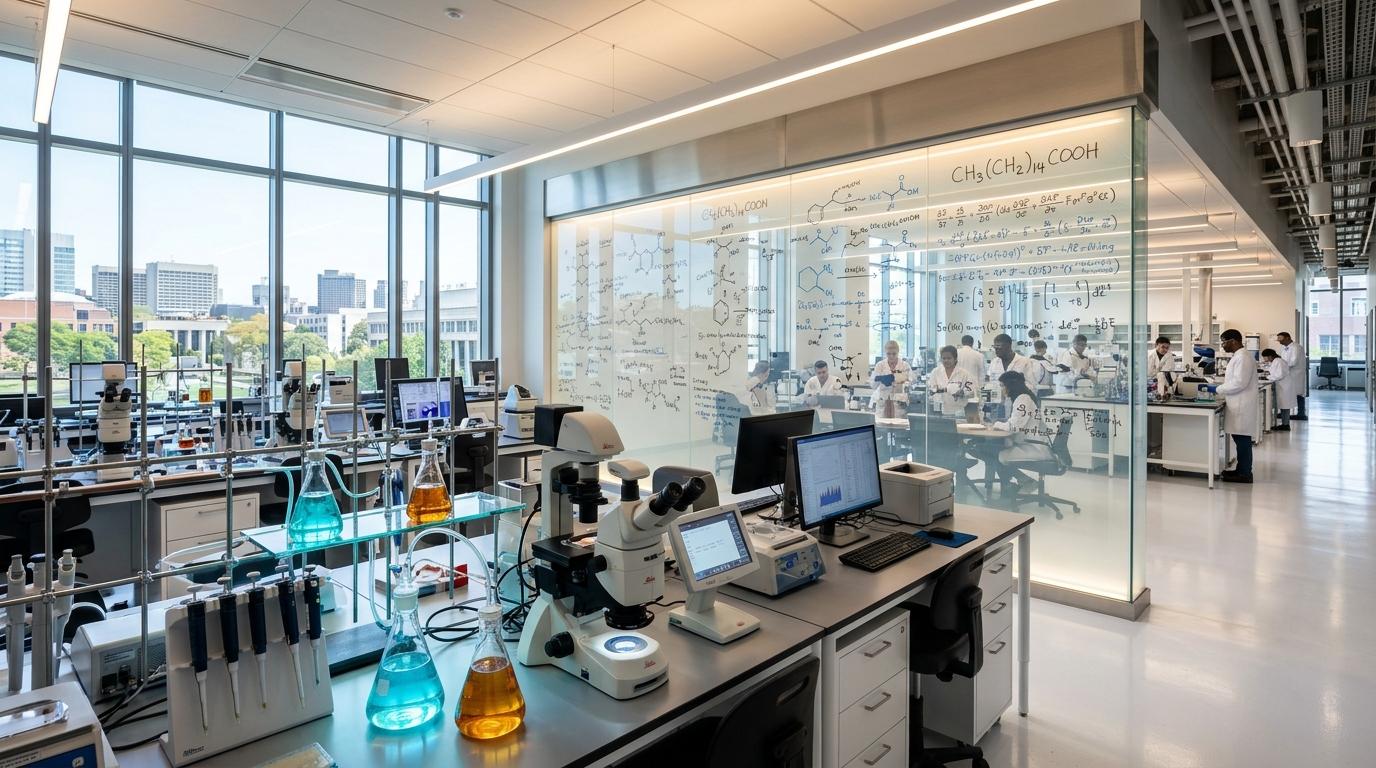
Founded in 1959 and co-sponsored with MIT, Caltech, and Harvey Mudd College, the Summer Science Program (SSP) immerses 36-student campus cohorts in 5 weeks of collaborative experimental research across Astrophysics, Biochemistry, Bacterial Genomics, and Synthetic Chemistry.
- Admits roughly 600 to 700 high school juniors across 13 to 14 partner campuses in the US and Canada from ~3,800+ applications (~16% overall; ~10% for international applicants).
- Students work in teams of three for 60 hours per week alongside two PhD Academic Directors and four Teaching Assistants, with zero grades or tests.
- Operates on a strict need-blind admissions policy with a 0 application fee, 100% free tuition and travel for qualifying families, and 3,000 summer stipends for high-need students.
- Listed directly on the MIT and Caltech admissions portals as a premier co-sponsored summer research credential.
Acceptance & Selectivity Funnel
Historical progression data from global registration through finalist commendations and podium honors.
What Summer Science Program (SSP) Looks For
Tracks, Judging Criteria & Curriculum Alignment
Four Research Tracks, Prerequisites & Age Rules
- Astrophysics & Synthetic Chemistry Tracks
- Astrophysics (Near-Earth Asteroid Orbit Determination): Requires Physics AND Precalculus completed on school transcript by June (or Calculus if taken as a sophomore).
- Synthetic Chemistry (De Novo Macrocyclic Catalyst Design): Requires Chemistry completed on school transcript by June.
- Biochemistry & Bacterial Genomics Tracks
- Biochemistry (Fungal Enzyme Inhibitor Drug Design) and Bacterial Genomics (Experimental Evolution of Antibiotic Resistance).
- Both life-science tracks require Biology AND Chemistry completed for credit on your school transcript by June.
- Strict Junior-Only (Grade 11 / Class XI) & Age 15-18 Rule
- Open exclusively to current high school juniors (Class 11) who are at least 15 and under 19 throughout the entire program.
- All applicants attending high school outside the US (including US citizens in India) must apply by the earlier January International Deadline.
Holistic, Context-Driven Selection Criteria
- Short-Answer Essays as the Primary Selection Driver
- SSP explicitly states that the short-answer essays (150 to 500 words each) are the most important part of the application.
- Readers evaluate authentic curiosity, emotional maturity, and how you respond when an experiment or code script fails.
- Collaborative Team Fit Over Cutthroat Solo Ego
- Every campus divides 36 students into 12 teams of 3 who share telescope time, wet-lab benches, and code repositories.
- Teacher evaluations probe character, humility, and willingness to help peers rather than solo test-taking ego.
- Transcript Rigor in Context (Standardized Tests Optional)
- Prerequisite classes must be formal for-credit school courses on your transcript; self-study on Khan Academy does not qualify.
- SSP evaluates achievements relative to school and family resources (36% of admits are low-income and 37% are first-generation).
Curriculum Mapping & Target University Majors
- IB Diploma and Advanced Placement Alignment
- IB DP: Physics HL, Chemistry HL, Biology HL, and Mathematics AA HL.
- AP: AP Physics C, Calculus BC, Chemistry, Biology, and Computer Science A.
- CBSE, ISC and Cambridge A-Level Alignment
- CBSE and ISC: Class 11 Physics, Chemistry, Mathematics (for Astrophysics/Chemistry) or Physics, Chemistry, Biology (for Biochem/Genomics).
- Cambridge A-Level: Physics (9702), Chemistry (9701), Biology (9700), and Mathematics (9709).
- Supported Undergraduate Degree Pathways
- Physical & Computational: Astrophysics, Physics, Computer Science, Applied Mathematics, and Aerospace Engineering.
- Life & Chemical Sciences: Biochemistry, Molecular Biology, Genetics, Pharmacology, Bioengineering, and Chemical Engineering.
Past Prompts & Winning Framework
Deconstruct real prompts and case studies through our analytical evaluation framework.
“What scientific or mathematical topic currently fascinates you most, and how have you explored it beyond your required school classes?”
Zero in on a specific mechanism aligned with your chosen SSP track (such as orbital perturbation numerical integration in Python or allosteric fungal enzyme inhibition).
Show concrete initiative beyond school syllabus boundaries, such as writing a simulation script, analyzing public observational data, or running a school wet-lab assay.
Avoid listing competition trophies or name-dropping advanced buzzwords you cannot explain; focus on the questions you still want to answer.
Connect your independent exploration to SSP's 3-person team model, explaining how you will contribute to and learn from your lab partners.
6-Month Preparation Timeline
Six-month preparation plan for the January International SSP deadline.
Track Selection & Prerequisite Audit
- Audit your Class 11 school transcript to confirm formal enrollment in all prerequisite courses for your chosen track.
- Complete an independent Python coding or wet-lab project related to your track between August and October.
Teacher Evaluators & Essay Brainstorming
- Brief your science and math teachers in November on SSP's collaborative, non-competitive culture.
- Outline your short-answer essay stories focusing on resilience, debugging, and teamwork.
Portal Registration & Essay Drafting
- Open your SSP portal account in mid-December and trigger teacher evaluation and transcript requests.
- Draft and polish all short-answer prompts within strict character limits.
January International Submission & Aid Filing
- Submit your complete application before the January 24 International Deadline (required for all students at schools in India).
- Prepare financial aid documentation if applying for need-based tuition or travel grants.
Important Deadlines for Summer Science Program (SSP)
Annual Application & Summer Session Timeline
Admissions Strategy & Tips
Common Pitfalls to Avoid
Relying on Self-Studied Courses for Track PrerequisitesSSP requires prerequisite courses (such as Physics and Precalculus for Astrophysics, or Biology and Chemistry for Biochem/Genomics) to appear for credit on your official school transcript.
Missing the Earlier January International DeadlineAll applicants attending high school outside the US (including US citizens studying in India) must submit by the January international cutoff, not the February domestic date.
Writing Solo-Genius Essays That Ignore CollaborationBecause SSP places 3 students on every research team for 60 hours a week, essays that boast about outcompeting peers rather than collaborating are rejected.
Planning to Enter Your Group SSP Project in Individual ISEFSSP projects are standardized 3-person collaborative investigations and cannot be submitted as a solo Regeneron STS or ISEF entry.
Frequently Asked Questions: Summer Science Program (SSP)
Common queries from applicants and families about admissions.
Quick Facts
Key Dates & Deadlines
Aiming for a Commendation or Global Podium?
Work 1-on-1 with past evaluators and top medalists who guide your research, review drafts, and run mock oral defenses.
Match Me With a MentorRelated Competitions
Get Mentorship for the Summer Science Program (SSP)
Work 1-on-1 with mentors on track selection, prerequisite verification, and SSP essay coaching.